|
DX Radio Listening Cleveland, Ohio 1958 - 1964 |
|
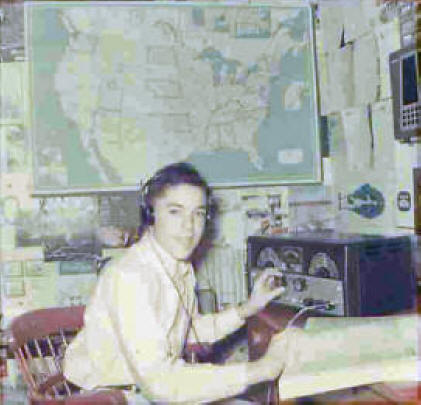
| In the fifties, Cleveland was not exactly a progressive place, and I had an early urge to go somewhere else. One way of doing this vicariously was through the arcane hobby of AM DXing... the search for distant signals on the commercial AM broadcast band. | |
 |
|
| A major influence on the nation and the radio industry in the earliest days of commercial radio, DXing had fallen off after W.W. II. However, there were still several national clubs that exchanged information about the long distance ("DX" in Ham radio parlance) reception of AM radio stations. I was one of those DXers who send reception reports to stations and expect to be rewarded with some form of written acknowledgment. | |
 |
|
| Digressing, I should explain why I would want to listen to a distant AM station, having a number of fairly decent ones in Cleveland. My father, before he managed a cemetery following the Depression (another story altogether), had worked as an investment banker. He encouraged me to learn about investing, and I bought several (as in "5") shares of Storer Broadcasting, owners of an AM-FM-TV combo in Cleveland. I felt it my duty to monitor my investments, and found that nearby Storer stations like WSPD in Toledo, WWVA in Wheeling and WMMN in Fairmont, West Virginia, could be picked up in Cleveland. | |
 |
|
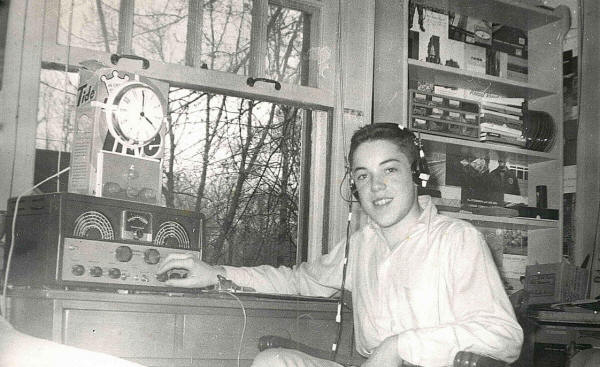
| One of my first receivers was a Hallicrafters SX-99. At age 12, I used a 200' length of copper wire to pull in the distant signals. A Tide box served well to mount the GMT-synchronized clock. | |
| When I tried for the more esoteric Storer stations, like WGBS in Miami and KPOP in Los Angeles (a station I would later program as KTNQ), I was unsuccessful. But I heard a lot of other interesting stations... and eventually heard almost all of the Storer stations, too. I spent many evenings and nights listening to AM stations, and verified receptions of several from New Zealand and Australia, a half-dozen from Hawaii, over two hundred from Latin America and dozens of Europeans, too. | |
 |
|
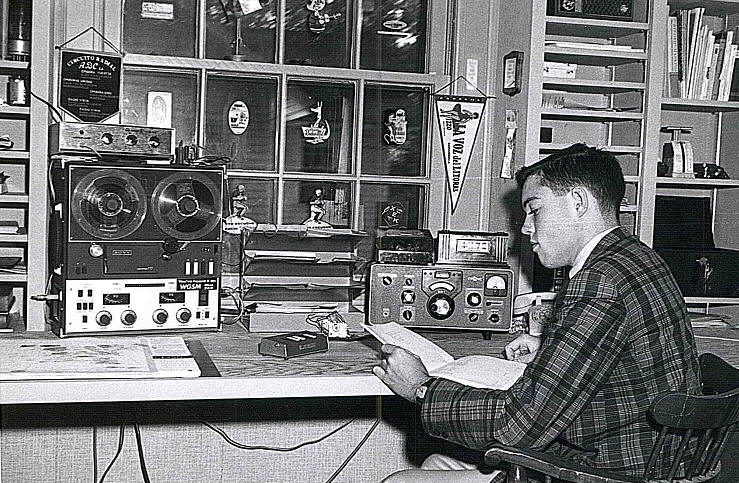
| Later, I obtained a Collins 51S-1 receiver and a state of the art Sony 777 tape deck, used to listen to those static-laden hard to identify signals from Puerto Rico and Ecuador and other exotic locales. | |
| The frequent goal of DXers was to receive verification letters or "QSL" cards verifying that the station had confirmed that reception did, in fact, occur. From Cleveland, I got about 2,400 verifications from 87 countries. | |
 |
|
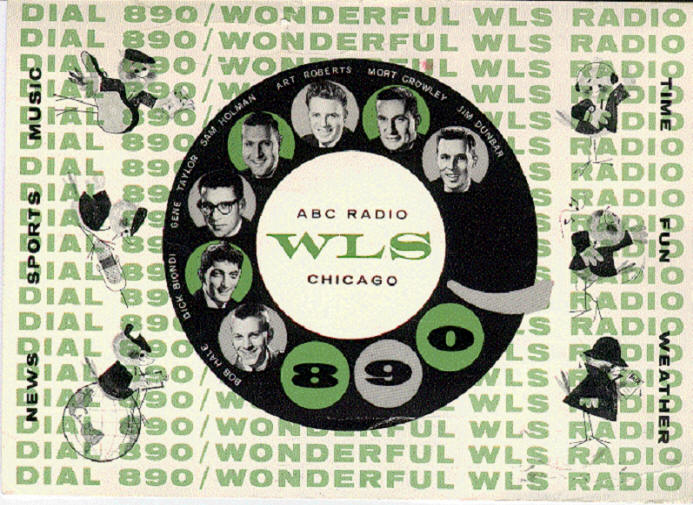
| Click on the WLS card above to see both a Verification of Reception and a station promotion card with the autographs of three of the WLS DJs of the early 60's, obtained by visiting the station. | |
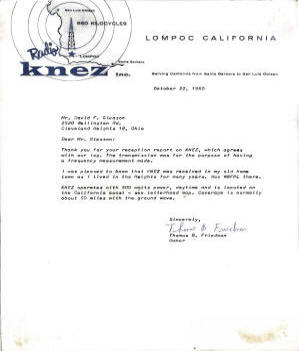
| DXing usually includes sending a report to each "catch" with details on what was heard, such as commericals, songs, DJ remarks, station ID's "word for word" and a request for a verification of the reception. | |
 |
 |
| Above is a sample of my "veries" (as AM broadcast band verifications had been called since the 40's) from California... in this case, KNEZ in Lompoc, a 500 watt daytimer on for a test. Click on that letter (allow pop-ups, please) and see the many other California verifications of my reception in Ohio. | Here are a set of veries from another state, Texas, which were received and verified between 1958 and 1963 at my DX post in Cleveland, Ohio. Click on the Verie above to see several megabytes of color PDF's of my 63 Texas veries, including nearly a dozen "graveyarders" (Class IV) stations operating at 250 watts" |
 |
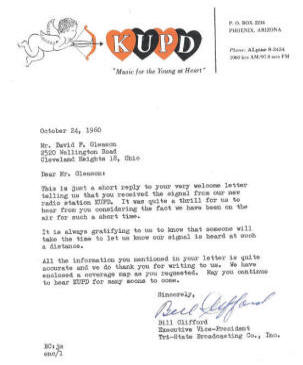 |
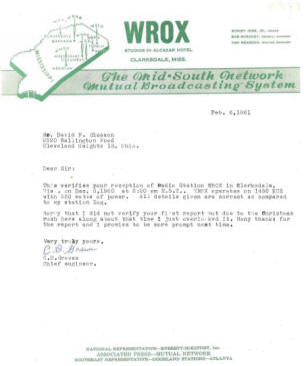
| Click on the this letter to see some verifications of reception from Mississippi. | Click on the this letter to see some verifications of reception from Arizona... including one 250 watt station, KRDS. |
 |
 |
|
Here is a verie
letter to another DXer of the era, Ben Dangerfield, signed by the
station owner and by me soon after my arrival in Ecuador in 1964 |
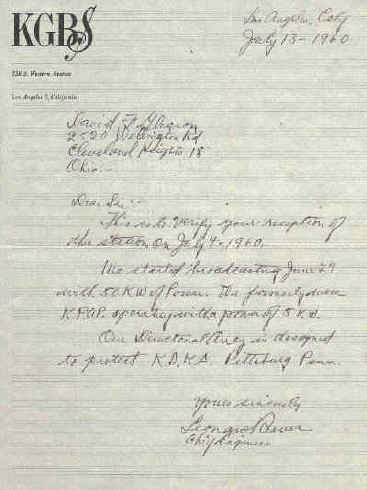
Another prized verification from KGBS
in Los Angeles from July of 1960. 35 years later, I would be the program director of this station under the call letters of KTNQ. |
 |
|
|
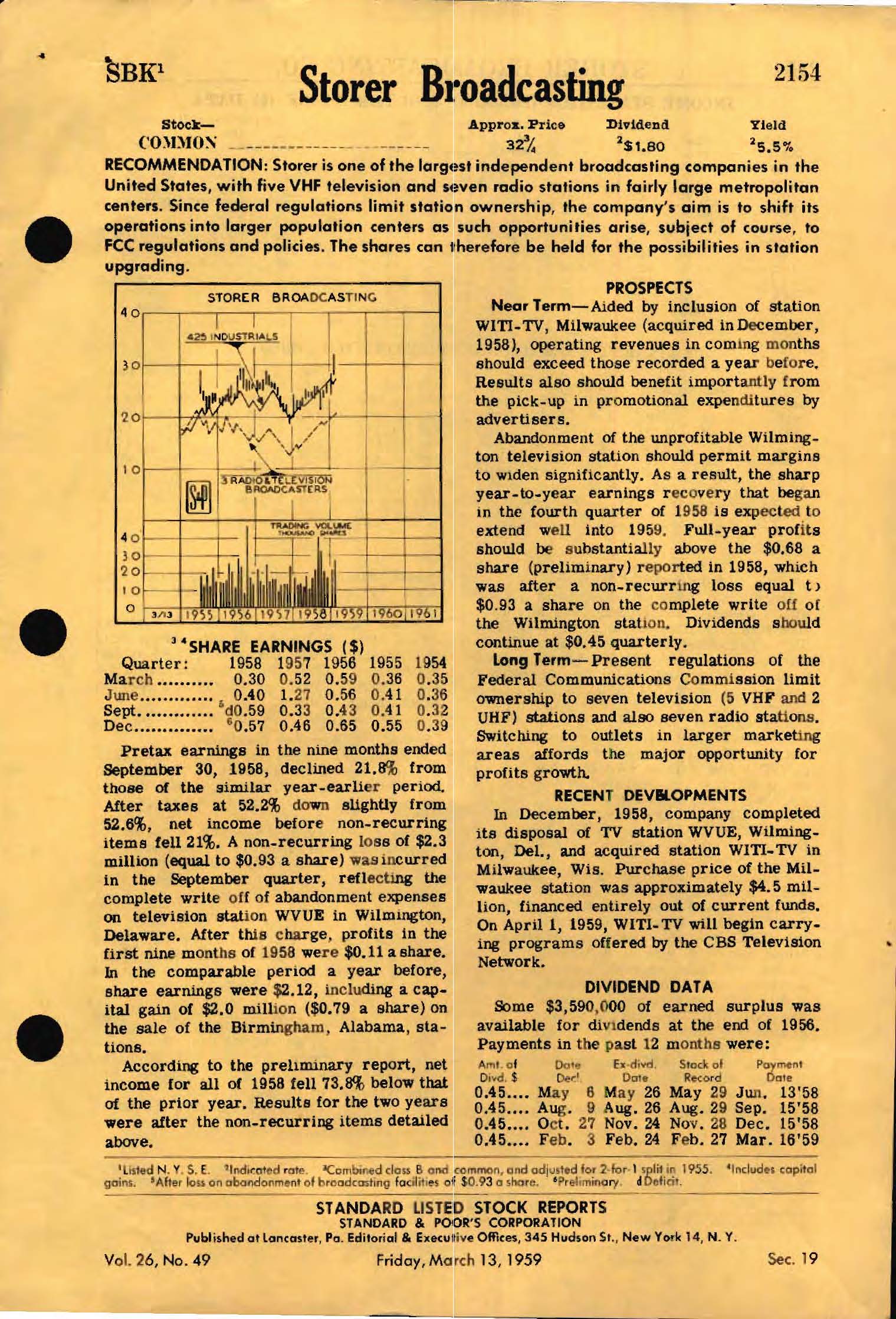
In fact, I
became fascinated by and enamored of KGBS's owner, Storer Broadcasting,
and became one of their most minor shareholders ever: my first trade was for a single share. |
|
 |
|
| One of my favorite stations was XEB from Mexico City | |
| That station came into Cleveland easily after the midnight sign-off of local WGAR. XEB's 100,000 watt power and its tropical format made it my favorite (at least till I discovered the cumbias on Una Voz en el Camino on La Voz del Río Cauca, HJED 820 from Cali, Colombia, | |
| Occasionally, I got permission from my mom to call the station and request songs. The distance made it interesting to the night DJ, and when I requested the Sonora Santanera's songs, I was usually put on the air! Eventually, the DJ recognized me and even knew the songs I wanted to hear. Years later, I visited XEB and the pictures are on the photo page of this site. | |
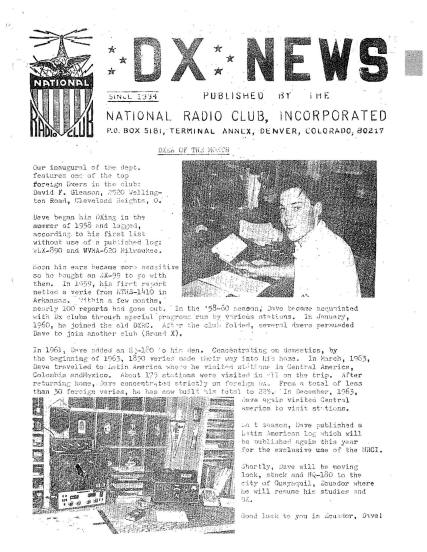
| One of a DXer's resources was membership in a radio club. In the early 60's, a group of DXers who were unsatisfied with the management of the National Radio Club formed the National Radio Club, Inc. which later became the IRCA, or International Radio Club of America. Here is a page from the NRCI bulletin, and clicking on the picture will bring up a PDF of the whole publication- | |
 |
|
|
I was on the
first board of directors of the IRCA, but my relocation to Ecuador prevented continuing as an active member. |
|