|
Puerto Rico 1975
WJIT AM & FM conversion to 11-Q and Sonorama
|
|
 |
|
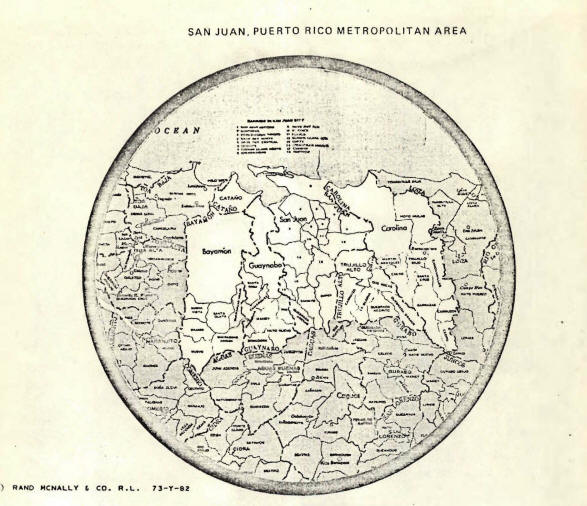
San Juan, Puerto Rico was U.S. Market #31 in
1975
Above is a map of the Pulse San Juan Metro Survey Area |
|
Back to
San Juan! |
In 1975, the
executive recruiting firm of Ron Curtis & Associates contacted me in
Phoenix and asked me to interview in New York for the General
Manager's position at a radio combo in Puerto Rico. Without
knowledge of the identity of the stations, I was asked to prepare a
management strategy based on current market conditions.
When I arrived in New York, I discovered the meeting was at the
headquarters of Pueblo International, Inc., owners of
perennial also-ran San Juan stations WJIT AM&FM. I interviewed with
CEO Harold Toppel and was hired before the other two candidates even
had a chance to meet with them.
I left Arizona State in my final college year, as completing the few
credits I needed for a diploma seemed a lesser option than working
for a company like Pueblo. I was soon back in Puerto Rico and found
out how truly horrid the station operations were. There was a reason
they were losing nearly $200,000 a year and were last in the
ratings. |
|
 |
|
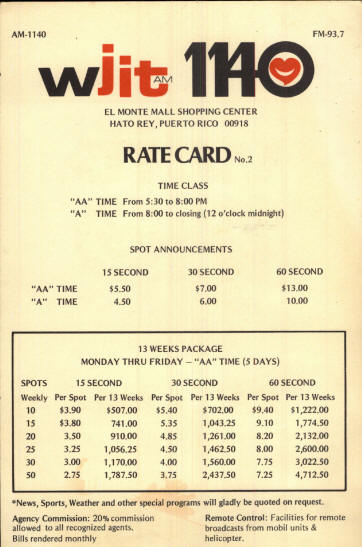
WJIT
Rate Card - 1974 |
| WQII had previously been WJIT, an ill
fated and poorly managed Top 40 station that was somehow attached to
the Holsum Baking operation in San Juan. When Holsum was acquired by
the Island's major supermarket chain, the main operation of Pueblo,
losses exceeded $20,000 a month and the physical plant was in a
shamble. At the time, San Juan was a $12 million a year radio
market. WJIT had an AM-FM combo rate of $13 for 60’s. Five years
later, the minute rate was well in excess of $100. |
| Rates were not the only problem the
WJIT combo had. Just staying on the air was a challenge. My first
task was to begin the 1975 license renewal application. After
finding that the stations had not even operated on several days each
of the FCC composite week and had, further, not run the correct
Public Affairs, news and Other commitments, FCC counsel Rainer Kraus
and I had significant work to do to save the licenses. To gain
credibility, I organized the first San Juan Broadcasters group to do
all the community leaders ascertainment collectively. |
|
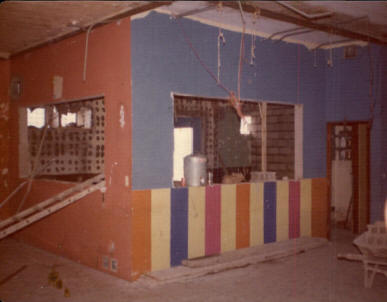 |
| The studio site in a congested
mid-town mall was inadequate and expensive; a defunct UHF TV
facility was purchased and renovated for radio use. One advantage:
the location was about 700 feet above San Juan and could be an FM
site, too. |
| The technical facilities were so
deteriorated that we decided to shut both stations down and rebuild.
Renovation was begun, and it included all new transmitters, a
redesign of the 4-tower directional system on AM, and all new studio
equipment. |
|
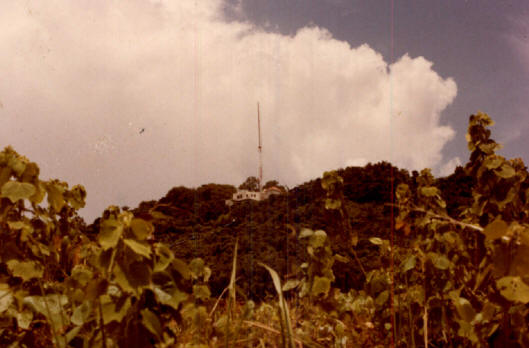 |
| A view of the Los Filtros, Guaynabo,
location where the abandoned Channel 18 TV tower still stood. With a
commanding view of the metro San Juan area, it was a perfect
location for the FM and was also only a 10 minute drive to the AM
site. |
|
.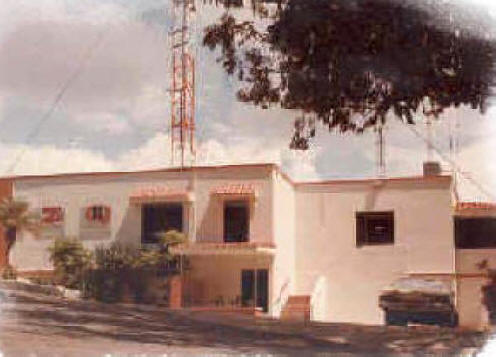 |
| The old WTSJ Channel 18 building was
gutted and renovated. This picture, taken a few years later, shows
the results. Located on top of a hill overlooking the entire San
Juan metro, it served as the FM transmitter site for over 25 years. |
|
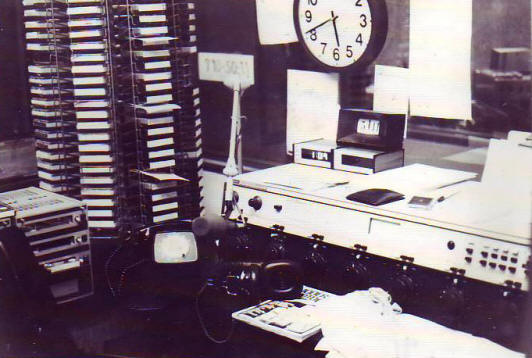 |
| New studios, were ready for 11-Q to
debut on August 28, 1975 with Puerto Rico's first Adult Contemporary
format... Sophy, Wilkins and Yolandita from Puerto Rico and Julio
Iglesias, Camilo Sesto and José José were representative artists.
|
|
 |
|
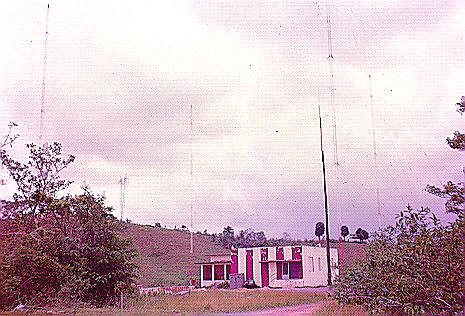
The WJIT transmitter
site was in such poor condition that the station was often off the
air for one and two day periods. |
|
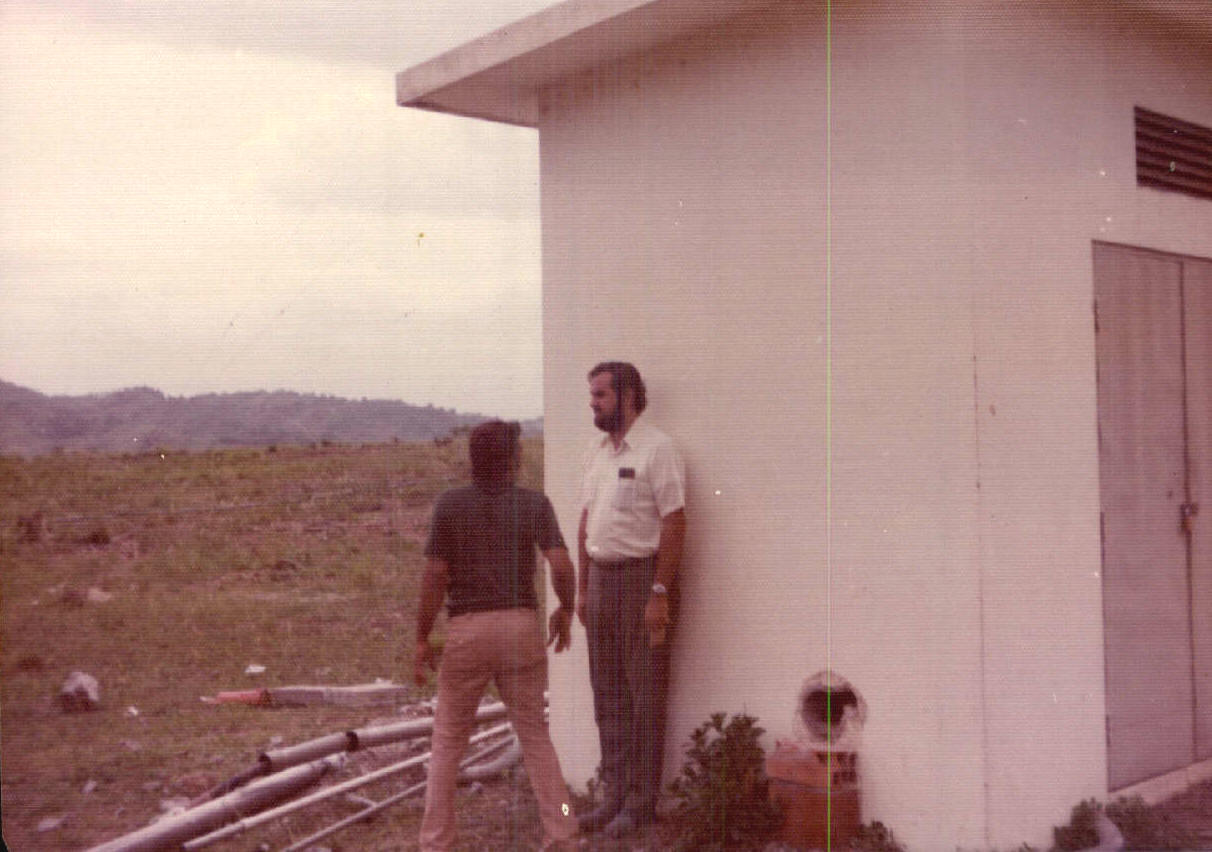 |
| The 4-tower directional system was
redesigned and rebuilt by Jules Cohen and Bob duTreil and returned
to the air with new equipment and improved coverage. It took four
months to install new equipment and adjust the directional system.
Here, WQII's Ing. Grafton Olivera, consults with the rigger about
bring down the 450 foot TV tower that was in the middle of the
directional array. |
|
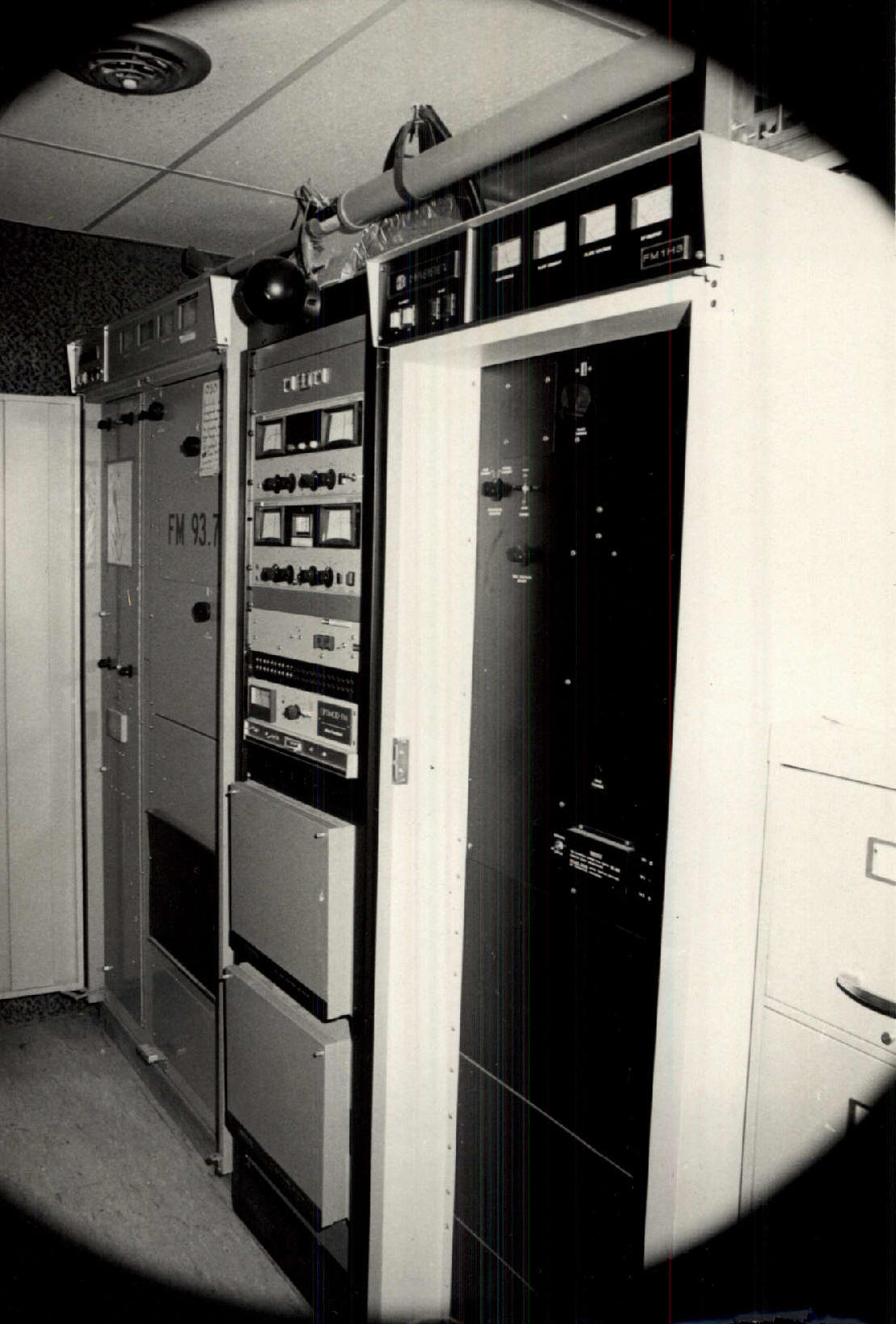 |
| Harris 10 kw FM main transmitter and
3.5 kw auxiliary transmitter at WSRA Sonorama 93. Note the dual
exciters in the rack, and the Optimod 8000 audio processing. |
|
 |
|
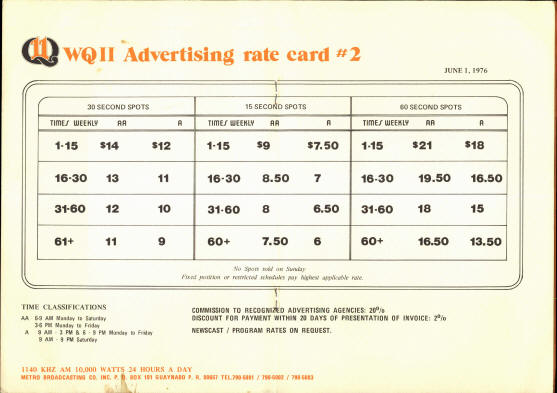
Business card above and
first rate card, below.
|
 |
| Initially, the
station was licensed to Metro Broadcasting. Later, to capitalize on
its ownership by the largest supermarket chain in Puerto Rico, the
name was changed to Pueblo Broadcasting. |
|
 |
|
Puerto
Rico takes its Q.
11-Q went on the air August 28th of 1975.
|
|
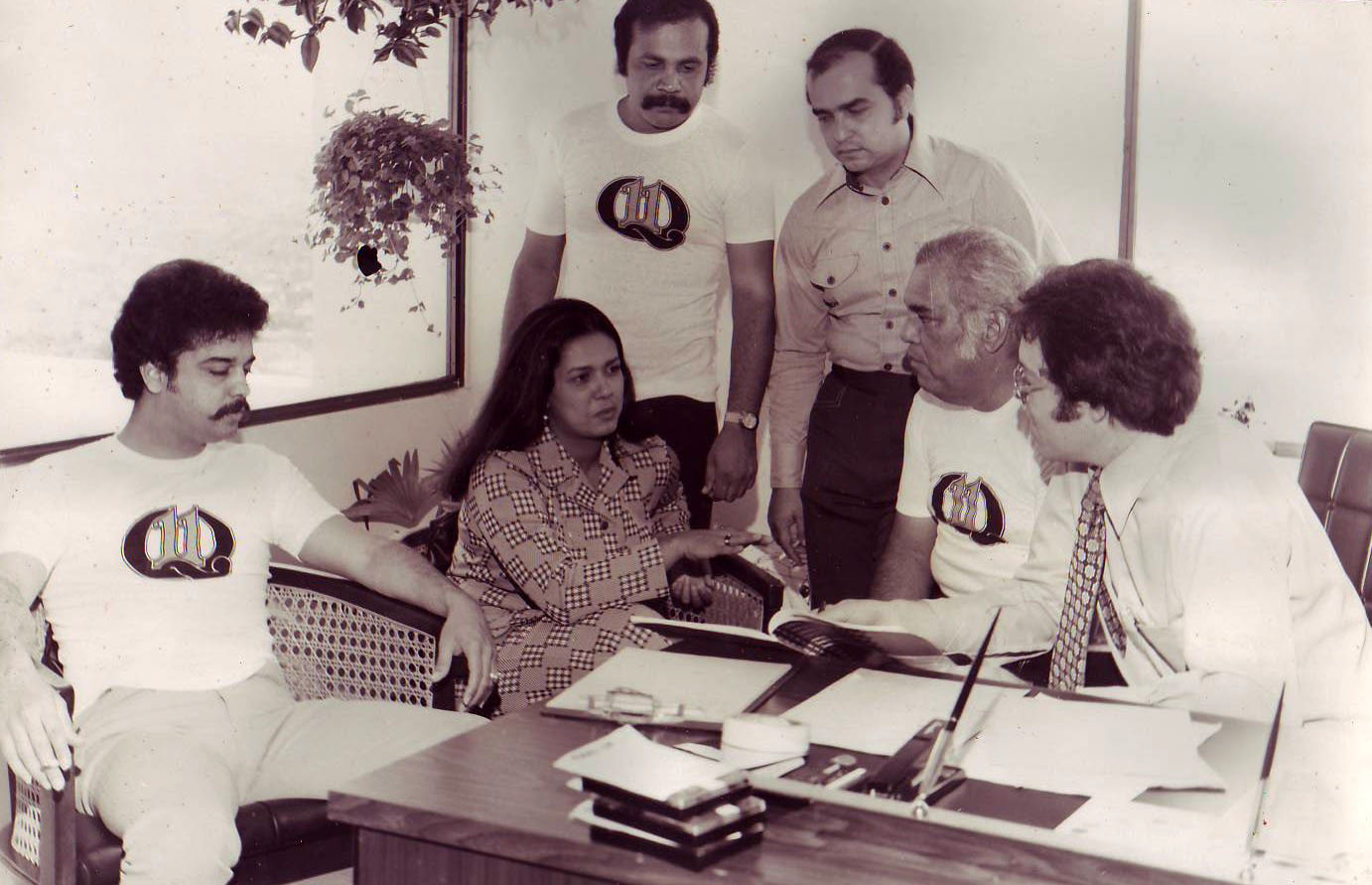 |
| For the first time, Puerto Rico had a
station with a dial-position based slogan. At 1140 with 10,000 watts
day and night, WQII was a solid competitor all over Eastern Puerto
Rico. Here is one of the first jock meetings. Abdiel Román
(7-Midnight), Wilma González (Office Manager and APD), Víctor Manuel
(3-7 PM), Saúl Maldonado (Traffic & Production), Rey Moreira (PD and
10-3PM) and David Gleason (GM) talk about the new format. Missing:
Kike Cruz, mornings, and Gilberto López, overnight guy on 11-Q. |
|
 |
|
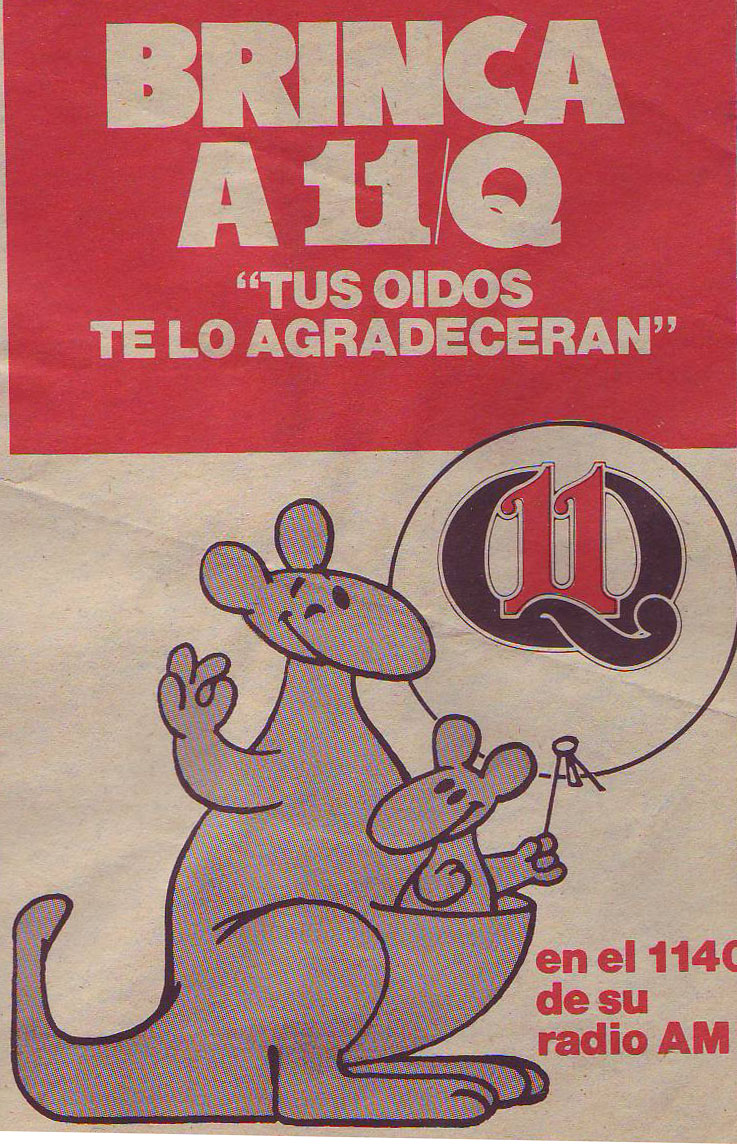
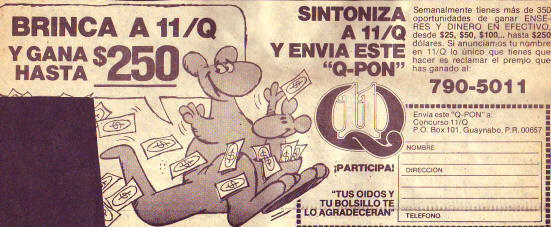
WQII rapidly became
the San Juan market's top station in 18-49. Both listener and sales
promotion were a major part in the success of this station. The ad
layout here features "Kanga-Q" the 11-Q mascot and the slogan, "jump
to 11-Q." |
|
 |
| In 1975, no FM
station appeared in San Juan ratings. WSRA became the first to show
with its locally produced mix of American and Latin easy listening
music and a bilingual on air approach. The station continued to be
successful through 1979, despite having four direct format
competitors in San Juan. |
|
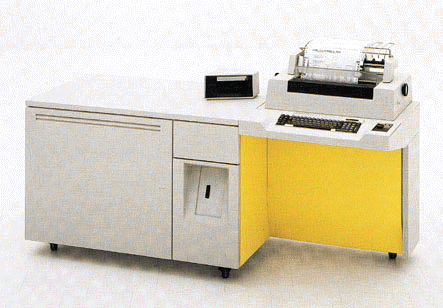 |
| Another of the innovations at 11-Q
was the computerization of all traffic and business functions. No
other station, radio or TV, in Puerto Rico was computerized. The
ability to produce exact time invoices, show when make-goods had
run, and to provide computerized statements was not just a time
savings; it was a guarantee to advertisers that 11-Q and Sonorama
ran schedules as ordered! This turned out to be a major sales
driver, and demonstrated to the ad community that the stations were
the most modern and professional in the market. |
|
 |
| One of the direct competitors to WSRA
contracted with Bonneville for its syndicated music programming.
Bonneville's consultant advised them that "they should not plan on
beating WSRA" because that station "is perfectly executed." The next
year, we blew the format up. |
|
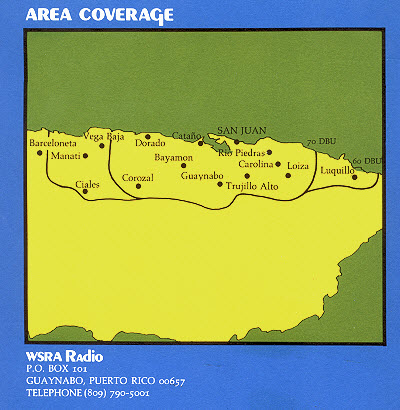 |
| Sonorama went on the air in early
1976 with a beautiful music format. Here is the coverage map from
the first sales brochure. |
|
 |
|
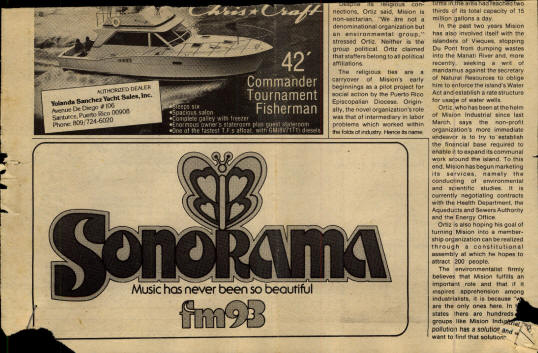
Sonorama
advertised in both English and Spanish. Here is a
San Juan Star English version. |
|
 |
|
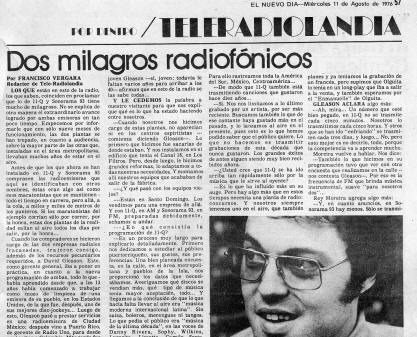
"Two
Radio Miracles"
Click on article to read a PDF version.
Click HERE to
read text version |
|
"Those who work in the radio business, those in the know, agree in
stating that what happened with 11-Q and Sonorama 93 has all the
elements of a miracle. There is no other explanation for the
extraordinary growth achieved by both stations in such a short time.
We will start by mentioning that, in only 9 months on the air, both
stations have jumped, insofar as audience is concerned, over most of
the other stations in the metropolitan area, stations that have been
on the air for years."
|
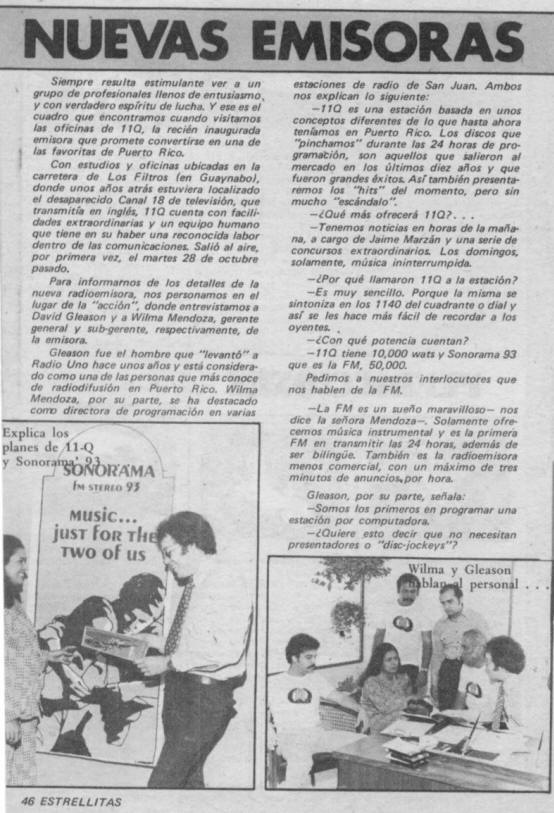 |
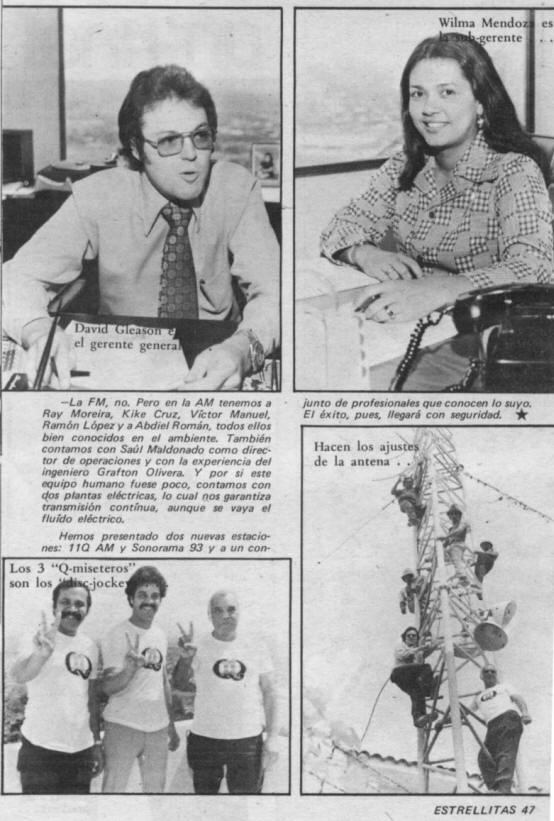
| An article in one of the local TV
magazines featured the new stations, and included a picture of the
air staff hanging from the FM tower! (I am the third from the
bottom) |
 |
| Another problem in San Juan was the
lack of any ratings service. The Clapp & Mayne service I helped
get
started in 1971 had been canceled due to bickering among the
subscribers. Before even going on the air, I took the first steps to
get The Pulse to rate the market. Working with Richard and Larry
Roslow at The Pulse and several broadcasters such as Reinaldo Royo
at WKAQ and Bob Bennett at WBMJ, the first Pulse was issued for
Summer, 1975. During the two years that the market had been unrated,
rates fell by nearly half, as there was no metric to establish value
with, and advertisers adopted a "take it or leave it" attitude and
offered low rates. |
|
 |
|
The Pulse
Feb-Mar 1976 |
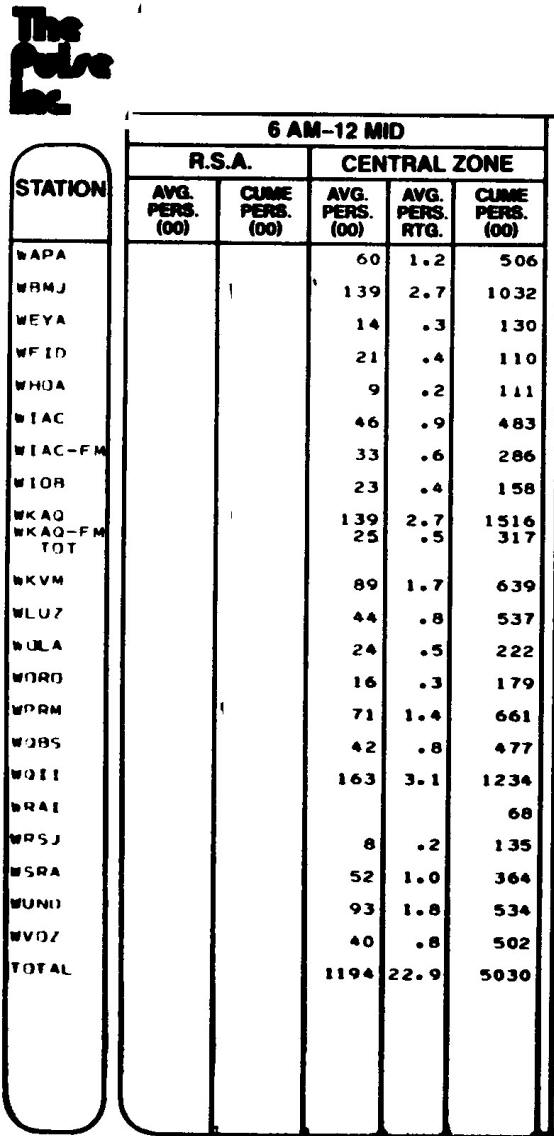
| The new station had been on the air
for 6 months when the Spring Pulse was conducted. The station that
"couldn't work" was #1 with a 3.1 rating and nearly a 15 share in
18-49 (Above table). This position was maintained up till we
unintentionally created the "FM revolution" of 1979 in Puerto Rico. |
|
Click on the
Pulse graphic above or the chart below to see a full PDF
of the San Juan Pulse for Fall of 1976.
|
 |
|
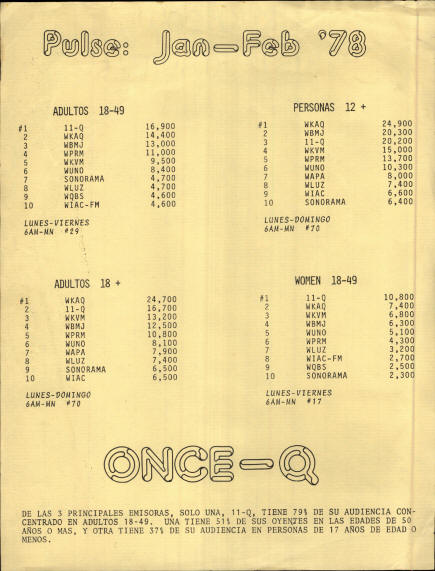 |
A ratings ranker from WQII in 1978
shows the dominance in women and
18-49 overall. |
|
 |
| I conducted a two-year campaign,
enlisting the Economic Development Board and the PR Planning Board
for statistical backing, to have SRDS list San Juan among the market
tables in that time-buying publication. |
 |
|
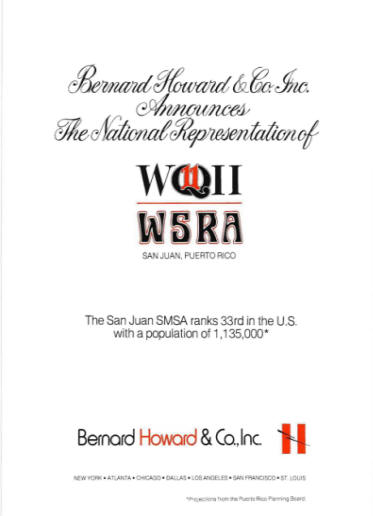
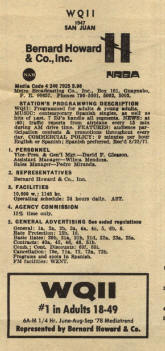
Finally, the city was listed as market #31 nationally,
and WQII/WZNT signed Bernard Howard as national reps. Click on the
ad to see a full size PDF version of the Inside Front Cover
announcement in
Broadcasting Magazine, May 16, 1977. |
|
 |
|
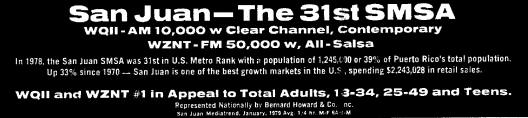
SRDS ad for WQII in 1979...
#1 in the 31st US market! |
|
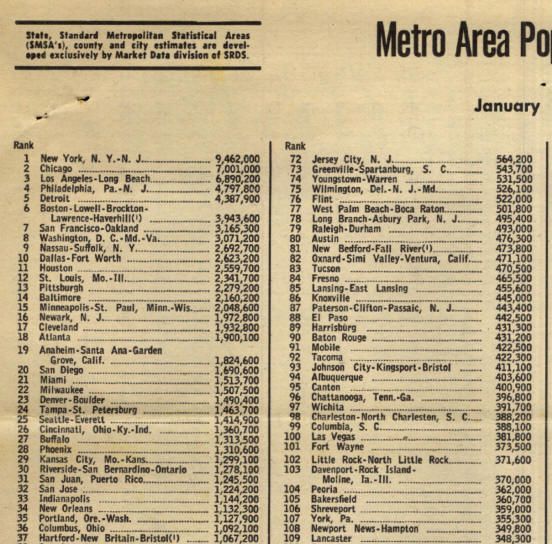 |
| Here is the SRDS market ranking table
that shows San Juan among the other US Markets. |
| When 11-Q was getting ready to go on the air, even
the record promoters thought it would be a disaster. A station with
only ballads? Impossible. "Boring, monotonous" was the consensus. It
debuted at #1 in 18-49 women, and remained there for five years
until Z-93 disrupted the entire market in 1979. |
| In fact, 11-Q was the first Spanish AC in the US,
and, although it was an AM station, WQII was the prototype for the
Spanish FMs of the next several decades including KLVE, WAMR, WPAT
and others. |
|
 |
|
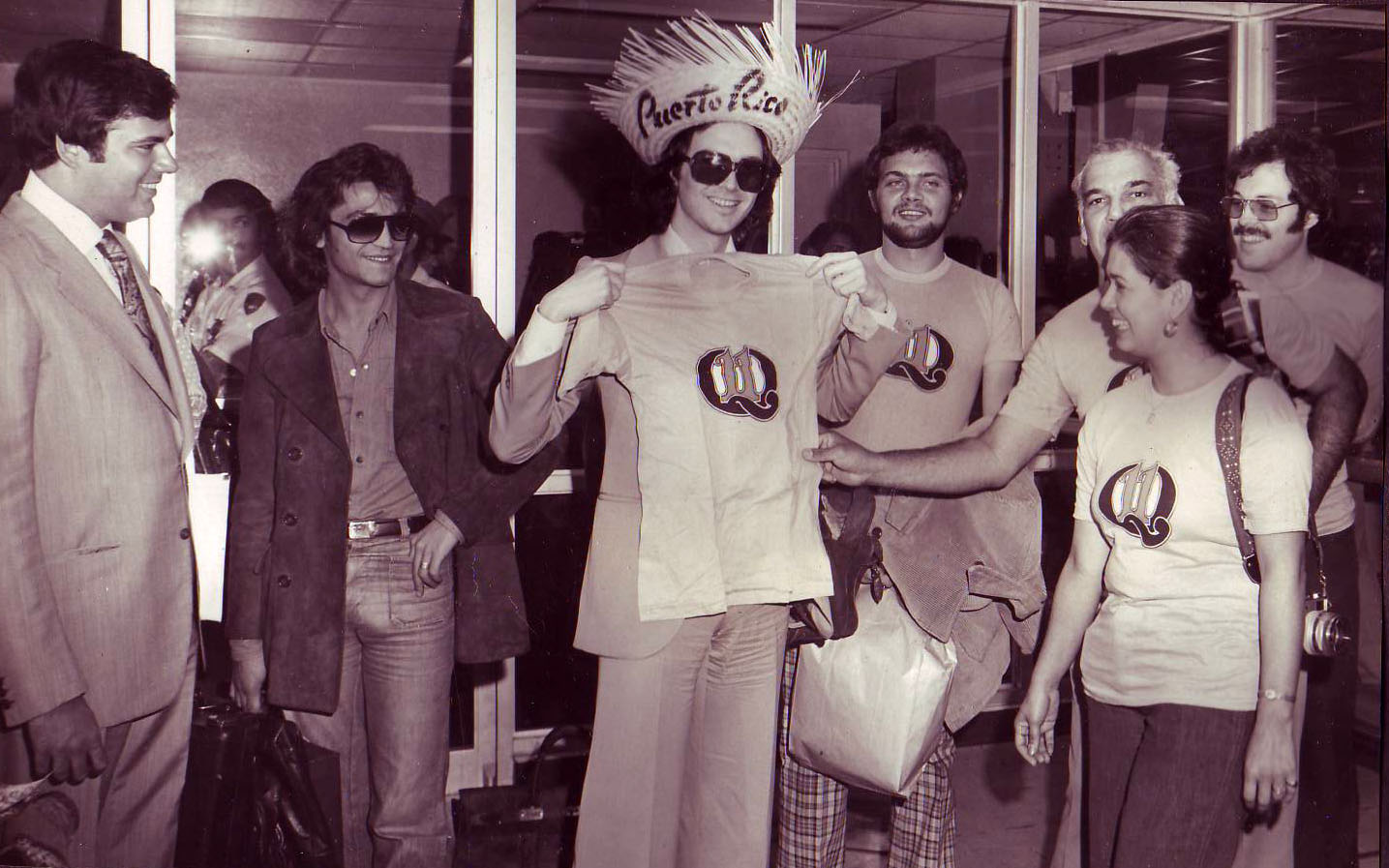
Camilo
Sesto tries out a Q-miseta Left to right: Rinel Sousa, CBS records, Manolo Sánchez,
Camilo´s manager, Camilo, Pedro Miranda, 11-Q morning host,
Rey Moreira, 11-Q mid-days and PD, Wilma González, 11-Q
Office Manager and David Gleason, general manager.
|
 |
|
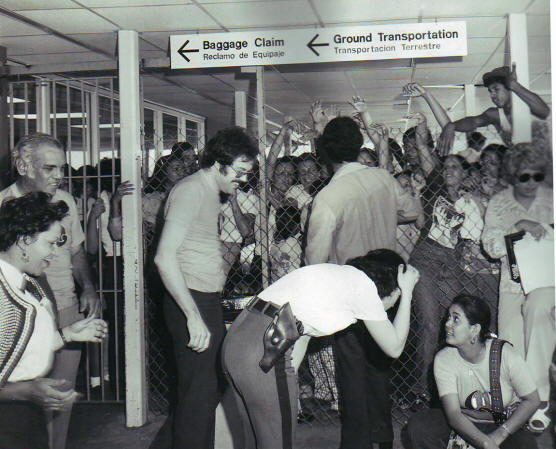
Camilo Sesto's
first visit to San Juan was promoted on 11-Q and the listeners
turned out to see him and to win 11-Q prizes. 11-Q was the first
station to bring international stars like Camilo, José Velez,
Roberto Carlos and others. And the station was a strong supporter
of local talent like Willkins, Nydia Caro, Yolandita, Oscar Solo,
Olguita, Danny Rivera, Aquamarina, Anexo 3, Katraska, and many
others. |
|
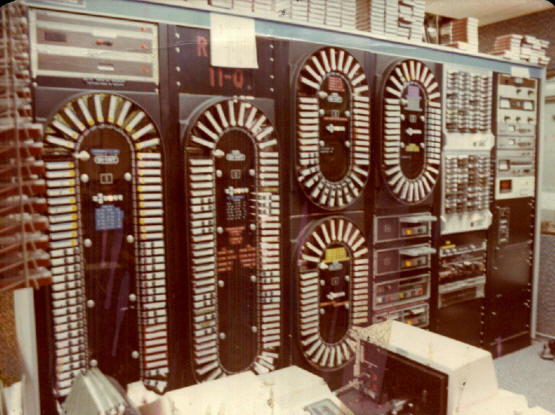
Click on the picture for the
full sales brochure for the System 9000 |
| Within a year of going on the air,
WQII moved to live-assist automation. This produced the additional
advantage of having the Monday to Friday talent available via voice
tracking on weekends and holidays. Voice tracking even allowed the
DJs to be out at street promotions while their shifts ran, making
live cut-ins very vivid! |
|
 |
|
 |
|
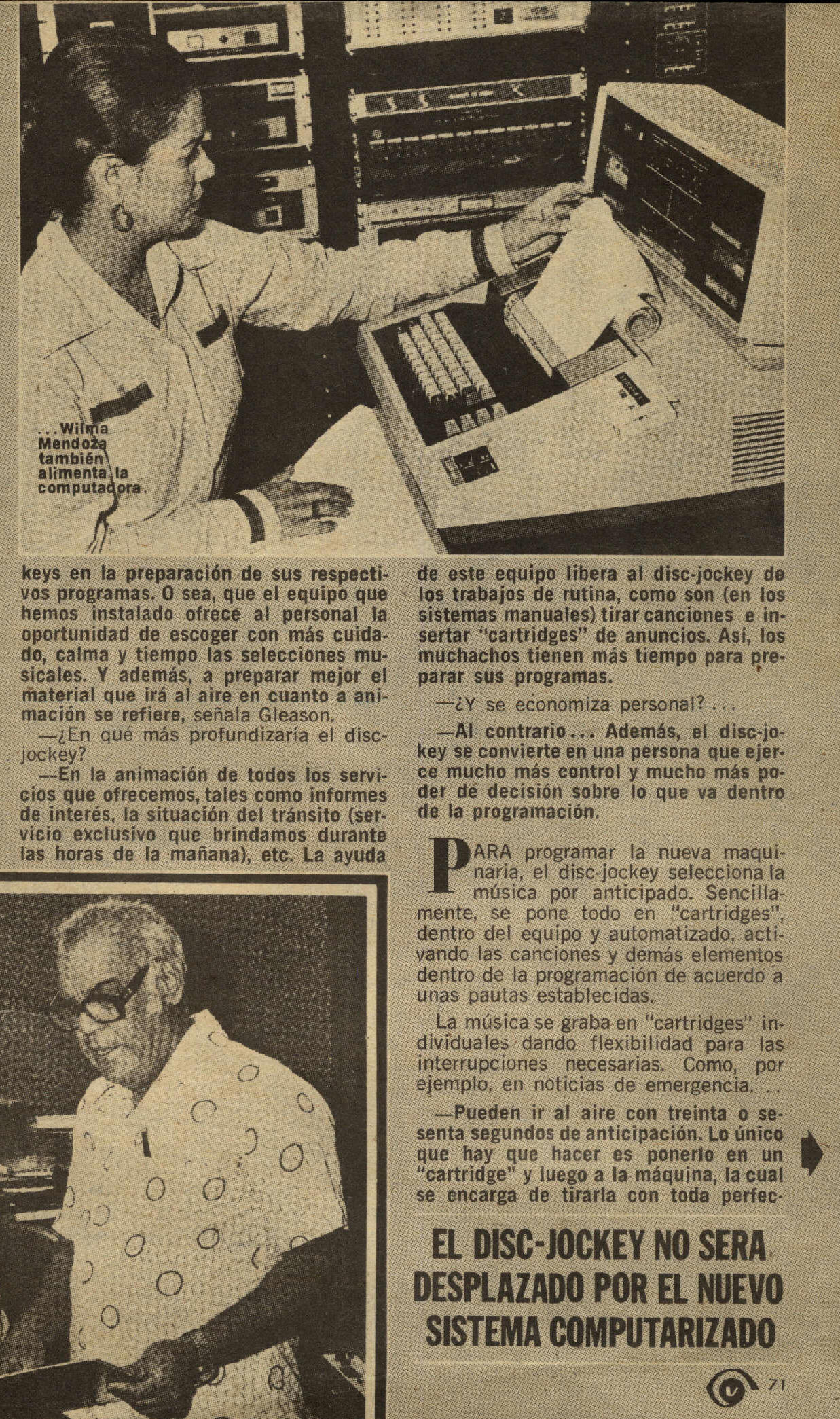 |
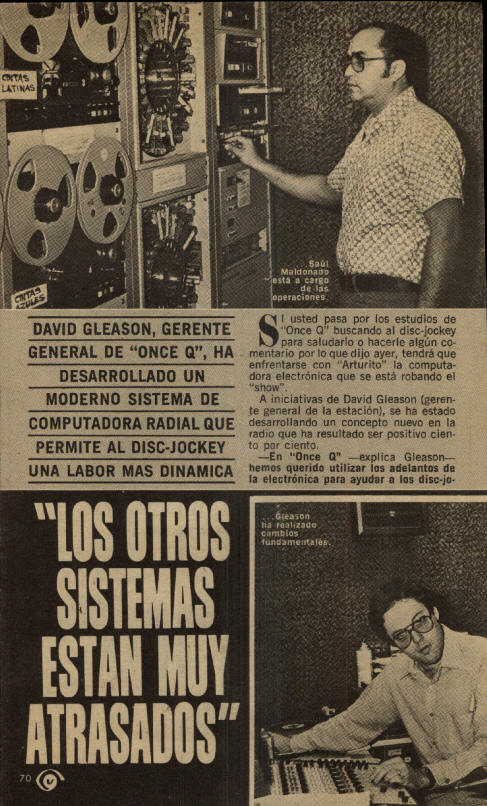
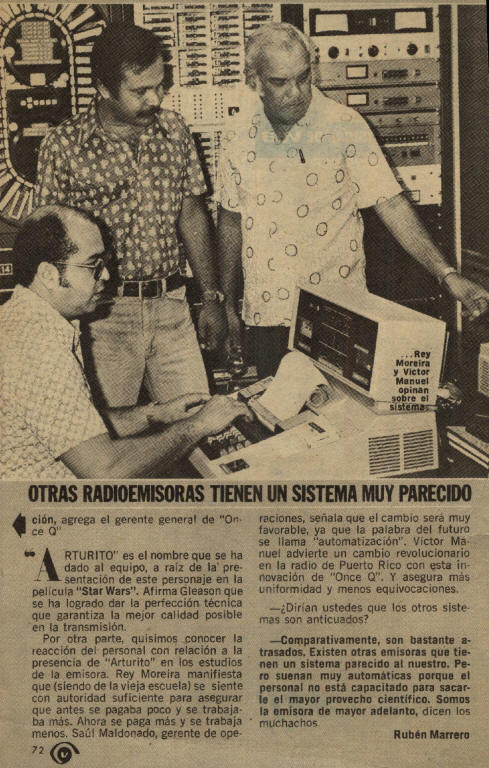
| An article ran in Vea magazine
showing how the automation made 11-Q an even better station. |
|
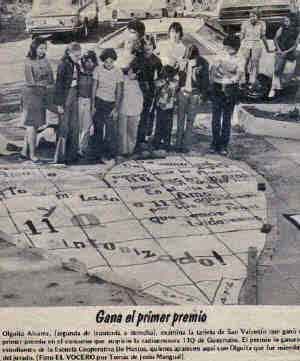 |
| 11-Q was very promotionally oriented.
Here, the school children who won a "biggest Valentine" contest
claim their prize of a sound system for their school. With them are
Puerto Rican pop stars Olguita, Oscar Solo and Mauro. |
|
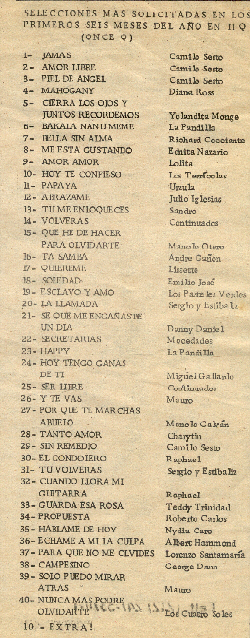 |
| A 1976 Hit List from 11-Q showed the
top 40 most requested tunes from the first 6 months of the year.
Click on the list for a slow-to-load high resolution version that
you can actually read. |
|
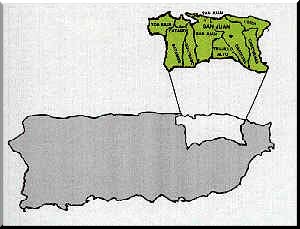 |
| Arbitron now recognizes Puerto Rico
as the 13th market in the US... and the entire Island is a single
market, not just the San Juan metro pictured above. |
|
 |
|
Pueblo
Supermarkets... |
| Pueblo International, the owner of
WQII and WSRA (and later WZNT) was a major supermarket company. It
was nothing short of a culture clash to compare a business with over
30% margins with one with margins well under 1%. |
|
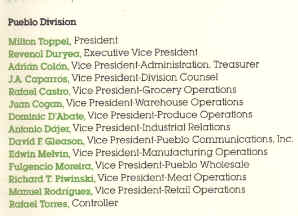 |
| The Pueblo officers had titles like
"Vice President - Meat Operations." It was educational, and taught a
lot about retailing that was useful in the radio business. |
| A look at the financial
operations of a station in the 70's |
| Here are the budgets
and financials of Pueblo Communications, formerly Metro Broadcasting,
for the years from 1976 to 1980. The parent had a non-calendar fiscal
year. |
-
Budgets and actuals from 1976 to 1979
-
WQII & WSRA annual financial report for 1978
-
WQII and WSRA first year of operation report to the Board of
Directors
-
My original presentation pre-employment to Harold Toppel and
Robert Locke
-
1979 Pay Package for the General Manager (me) showing how such
packages were structured.
|
|
 |
|
Pueblo 1979 Annual report.
Click on the Cover for
the full PDF version of the report. |
|
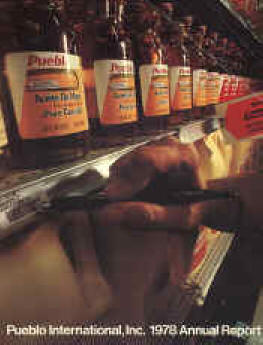 |
| Here is the cover of a Pueblo Annual
report. In 1978, the company made more from the radio stations than
from the supermarkets. They did not make note of this in the report,
though. |
|
 |
|
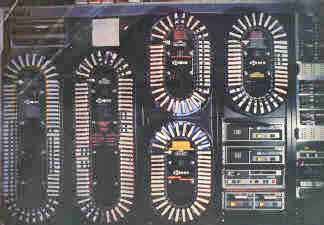
The text under this
picture in the Pueblo Annual Report reads like this...
"Management
is particularly pleased with the turnaround of the company’s Metro
Broadcasting subsidiary. The two radio stations now fully automated
and with new broadcasting formats to attract larger music listening
audiences, are expected to enhance Pueblo’s future operating
results. |
|
 |
| Pueblo was a public corporation
(NYSE: PII) while I was with the company. The economic problems
caused by the purchase and later sale and bankruptcy of the Long
Island, NY, Hills chain brought the stock tumbling. The Toppel
brothers, founders of the company, attempted an LBO. The economic
slump in PR in the early 80's forced the sale of the company to the Cisneros family interests from Venezuela.
Pueblo is now out of business. |
|